
Anti-Aging Creams: Buy Evidence, Not Miracle Claims
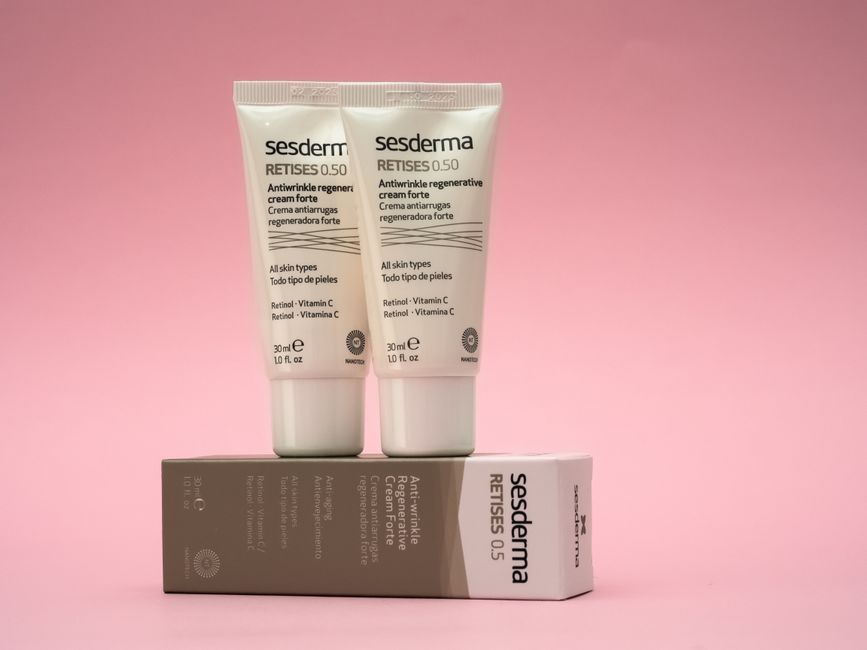
Choose an anti-aging cream by starting with daily sunscreen and a moisturizer suited to your skin, then add one targeted product only after those basics have had a few weeks to work. Retinol and vitamin C have the strongest recommendation in a 2024 review, one tested peptide showed benefit, and price alone predicts nothing. Expect modest change, not a facelift in a jar.
What ingredients in anti-aging creams actually have evidence behind them?
The best-supported starting point is not an exotic cream. It is sunscreen and moisturizer.
The American Academy of Dermatology calls daily sunscreen and moisturizer the two most effective anti-aging products consumers can buy. For time outdoors, it recommends a broad-spectrum, water-resistant sunscreen with SPF 30 or higher, reapplied every two hours.
Moisturizer has a plain job. It traps water in skin, which can make fine lines look less visible at once. That is a visible hydration effect, not proof that lines have been permanently removed.
A 2024 systematic review in PubMed screened 153 anti-aging cosmeceutical articles and included 32 clinical studies involving 1,236 patients. Its authors gave retinol and vitamin C a Grade A recommendation for anti-aging use. The same review found insufficient data for conclusive recommendations on many other assessed ingredients and called for more long-term research.
That split matters. An ingredient name is not a verdict. Product claims are not evidence. The useful question is whether the supplied research names the ingredient, the formulation, the test period, and the outcome.
Skin type still sets the terms. The AAD advises choosing products formulated for oily or sensitive skin when those labels fit your needs. A simple routine also leaves room to notice what changes your skin.
Do peptide creams really reduce wrinkles?
One peptide formula reduced fine lines and wrinkles in a controlled study; that result does not prove that every peptide cream does the same.
The study published through PubMed enrolled 93 women aged 35 to 55 with photoaged facial skin. For 12 weeks, participants used either a moisturizer control or the same moisturizer with 3 ppm palmitoyl-KTTKS, also called palmitoyl pentapeptide.
The peptide formula showed statistically significant improvement against the moisturizer control by quantitative imaging and expert assessment. It was also well tolerated in that study.
The boundary is the lesson. The study tests palmitoyl-KTTKS at that concentration in that formulation for that duration. A package that says “peptides” does not tell you it matches the tested ingredient, dose, vehicle, or study design.
Compare the claim with the evidence. Specific is useful. Vague is expensive.
Should I choose retinol, peptides, ceramides, or hyaluronic acid?
Choose retinol when you want the strongest ingredient-level support in the supplied review, choose a tested peptide formulation when its evidence matches the product, and choose ceramides or hyaluronic acid for the moisturizer role only when the product suits your skin because the supplied sources do not publish ingredient-specific comparison evidence for them.
There is a tension inside the retinol evidence. The 2024 systematic review awarded retinol a Grade A recommendation. A separate systematic review of over-the-counter vitamin A cosmetic products found nine randomized, double-blind, vehicle-controlled trials: five suggested only mild potential improvement in fine facial wrinkles, while four found no statistically significant difference from vehicle. Its authors judged the high-quality evidence for over-the-counter cosmetic retinol to be very limited.
That does not make the choice impossible. It makes the promise smaller. Retinol requires conversion to active retinoic acid; the review distinguishes it from tretinoin, an extensively researched prescription retinoid.
For a dry routine, a moisturizer that helps retain water is a sound first layer. For oily skin, select a moisturizer formulated for oily skin. For sensitive or reactive skin, the AAD advises applying a small amount to the inner forearm twice daily for 4 to 5 days before using it on the face. Stop if an over-the-counter product stings or burns.
Add one product at a time. The AAD warns that using several anti-aging products in a short period can irritate skin. More steps can mean less clarity.
| Option | What the supplied evidence supports | Who it suits | Cost | Key limitation |
|---|---|---|---|---|
| Moisturizer | Traps water and can immediately reduce the visible appearance of some fine lines | Skin needing hydration; choose a formula made for your skin type | Effective products are available at all price points | Immediate plumping does not prove permanent wrinkle removal |
| Broad-spectrum, water-resistant SPF 30+ sunscreen | One of the two most effective anti-aging products consumers can buy when used daily | Daytime outdoor use | Not published | Requires reapplication every two hours while outdoors |
| Retinol | Grade A recommendation in a 2024 review; a separate review found limited high-quality evidence for over-the-counter cosmetic retinol | Not published | Not published | Over-the-counter trial results were mixed |
| Palmitoyl-KTTKS peptide | Improved fine lines and wrinkles versus moisturizer control in one 12-week study | Not published | Not published | Evidence applies to the tested peptide formulation, not every peptide cream |
| Ceramides or hyaluronic acid | Not published as ingredient-specific anti-aging evidence in the supplied sources | Not published | Not published | Do not infer wrinkle results from the ingredient name alone |
Is an expensive anti-aging cream better than a drugstore moisturizer?
No. The American Academy of Dermatology says effective anti-aging products come in all price ranges, and a higher price does not inherently bring better results.
Price is a poor shortcut because a cream can deliver a useful moisturizing effect without proving a structural change in skin. The FDA says a product that makes wrinkles less noticeable by moisturizing is generally a cosmetic. A product claiming to remove wrinkles or increase skin collagen production is making a drug or medical-device claim because it purports to affect the body’s structure or function.
This is where label reading becomes practical. The FDA does not pre-approve cosmetic labels and has no list of approved or accepted cosmetic claims before products go on sale. “Clinically proven” is not the same as FDA approval or FDA-reviewed clinical trials.
Use a short test instead of a grand promise: does the label identify your skin type, make a modest claim, and fit the routine you can keep? This same budget-first habit helps when comparing everyday health purchases, including guides such as how to meet calcium needs without dairy.
Read past the jar. The claim is the product’s first ingredient.
Frequently Asked Questions
Can I use an anti-aging cream if I have sensitive skin?
Yes, with a slower approach. The American Academy of Dermatology advises testing a small amount on the inner forearm twice a day for 4 to 5 days before facial use. Stop using an over-the-counter product that stings or burns, since irritation can make signs of aging more noticeable.
How long should I test a wrinkle cream before deciding whether it works?
A moisturizer can plump fine lines immediately because it traps water in the skin. Most wrinkle products need at least six weeks, and some need three months, according to the American Academy of Dermatology. Give sunscreen and moisturizer a few weeks before adding a separate product for one remaining concern.
Which claims on anti-aging cream packaging should I be skeptical about?
Be skeptical of promises to look years younger overnight, erase all wrinkles, or deliver facelift-like change. The FDA says a claim to remove wrinkles or increase collagen production is a drug or medical-device claim, not an ordinary cosmetic claim. “Clinically proven” does not mean FDA approval or FDA review of the cited trials.
Sources
- American Academy of Dermatology: How to select anti-aging skin care products
- American Academy of Dermatology: Wrinkle remedies
- U.S. Food and Drug Administration: Wrinkle Treatments and Other Anti-aging Products
- U.S. Food and Drug Administration: Cosmetics Labeling Claims
- PubMed: Cosmeceuticals for antiaging: a systematic review of safety and efficacy
- PubMed: Topical palmitoyl pentapeptide provides improvement in photoaged human facial skin
- PubMed Central: Evidence for the Efficacy of Over-the-counter Vitamin A Cosmetic Products in Facial Skin Aging